
The BRRRR Strategy in Ontario: How to Buy, Renovate, Rent, Refinance & Repeat
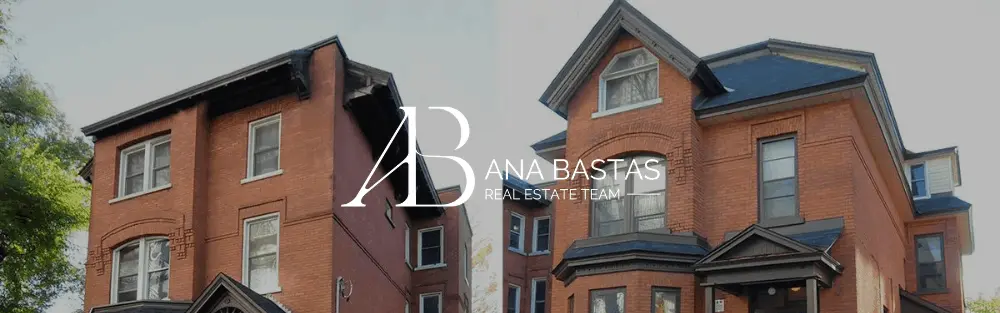
The BRRRR Strategy in Ontario: How to Buy, Renovate, Rent, Refinance & Repeat
What if the capital you put into your first investment property could eventually help you purchase your second?
And what if Property #2 could help you acquire Property #3?
That is the fundamental idea behind one of the most widely discussed real estate investment strategies:
BRRRR
The acronym stands for:
Buy → Renovate → Rent → Refinance → Repeat
The concept sounds straightforward.
The execution is not.
A successful BRRRR strategy depends on buying the right property at the right price, controlling renovation costs, creating genuine value, establishing sustainable rental income and ultimately having sufficient value and financing capacity to refinance.
The investor financing strategy used throughout this series illustrates a similar capital-recycling process:
HELOC Capital → Purchase → Renovate → Increase Value → Refinance & Repeat.
The objective is not simply to renovate a rental property.
It is to strategically create equity that may be redeployed into the next acquisition.
What Is the BRRRR Strategy?
BRRRR is a value-add real estate investment strategy built around five stages.
B — BUY
Acquire an investment property with identifiable value-add potential.
R — RENOVATE
Improve the property physically, operationally or through additional legal units where permitted.
R — RENT
Lease the property and establish sustainable rental income.
R — REFINANCE
Once the property has been improved and stabilized, investigate whether refinancing makes financial sense.
R — REPEAT
If sufficient capital can be recovered, redeploy it toward another investment.
The ultimate goal is capital recycling.
Instead of saving a completely new down payment every time you want to buy another rental property, the investor attempts to create equity inside existing investments.
Why BRRRR Can Be Powerful for Portfolio Building
Consider two investors.
Investor A
Buys a turnkey rental property.
It generates income and hopefully appreciates over time.
Investor A then begins saving for the next down payment.
Investor B
Buys an underperforming property.
They improve it.
They potentially add another legal unit.
Rental income increases.
The property's overall value may increase.
The investor then investigates refinancing and potentially recovers some of the capital invested.
That capital may become part of the down payment on another property.
Investor B is attempting to manufacture portfolio growth rather than waiting exclusively for appreciation.
That is the attraction of BRRRR.
STEP 1: BUY THE RIGHT PROPERTY
This may be the most important step in the entire strategy.
You make money in a BRRRR project by identifying an opportunity where:
Total Project Cost
is meaningfully different from:
Stabilized Property Value
A property requiring renovations isn't automatically a BRRRR opportunity.
A terrible house can still be a terrible investment.
What Makes a Good BRRRR Property?
For an Ontario investor focused on building a portfolio of duplexes, triplexes and other small multi-unit properties, we would look for opportunities such as:
An Existing Duplex With an Unfinished Basement
Potential opportunity to create an additional unit where permitted.
A Large Single-Family Property
Potential conversion into multiple residential units.
An Underperforming Triplex
Perhaps rents, condition or operations can be improved.
A Property With Unused Square Footage
Space that may have economic potential.
A Property With Separate Entrances
Potentially useful when investigating additional-unit configurations.
A Property With a Detached Garage or Accessory Structure
Potential additional dwelling opportunity where municipal regulations permit.
A Vacant Property
Potentially easier to renovate and reposition before leasing.
An Estate Sale or Dated Property
Cosmetic condition may discourage traditional buyers while creating opportunity for an investor.
The ideal BRRRR property has a solvable problem.
The Difference Between a Cheap Property and a Good BRRRR Property
Imagine two houses.
PROPERTY A
Purchase Price: $575,000
Renovations: $200,000
Total Before Closing/Financing Costs:
$775,000
Estimated Stabilized Value:
$800,000
Only $25,000 of theoretical value has been created before transaction and financing costs.
That may not provide enough margin.
PROPERTY B
Purchase Price: $625,000
Renovations: $100,000
Total Before Closing/Financing Costs:
$725,000
Estimated Stabilized Value:
$850,000
Potential theoretical equity creation:
$125,000
Property B costs more to purchase but could be the substantially stronger BRRRR opportunity.
This illustrates an important principle:
The cheapest house isn't necessarily the best investment.
STEP 2: RENOVATE TO CREATE VALUE
The objective of the renovation isn't simply to make the property beautiful.
This is an investment.
Every renovation dollar should ideally accomplish one of three things:
Increase Rental Income
Increase Property Value
Reduce Future Operating Costs
Ideally, it accomplishes more than one.
High-Impact BRRRR Renovations
Depending on the property, value may potentially be created through:
- creating additional legal units;
- adding bedrooms;
- improving kitchens;
- improving bathrooms;
- creating separate laundry;
- upgrading electrical systems;
- improving plumbing;
- adding separate entrances;
- improving lighting;
- improving flooring;
- improving energy efficiency;
- improving curb appeal;
- correcting deferred maintenance.
But renovations should be driven by return, not emotion.
Adding Units: Potentially the Biggest Value Creator
For investors building a multiplex portfolio, one of the most powerful value-add strategies may be increasing the number of legal rental units.
For example:
Single-Family Home
↓
Duplex
or:
Duplex
↓
Triplex
or, where permitted:
Triplex
↓
Fourplex
Adding another legal income stream can potentially change the property's economics significantly.
Don't Assume You Can Add a Unit
This is one of the most important cautions in the entire BRRRR strategy.
A basement does not automatically equal an apartment.
A side entrance does not automatically mean a legal second unit.
A large house does not automatically mean it can become a triplex.
Before buying based on conversion potential, investigate:
- zoning;
- permitted density;
- Building Code;
- fire separation;
- egress;
- ceiling heights;
- parking;
- electrical;
- plumbing;
- HVAC;
- servicing;
- structural requirements;
- permits;
- construction cost.
The question is not:
“Can I fit another kitchen down here?”
The question is:
“Can we legally, physically and economically create another rental unit?”
STEP 3: RENT THE PROPERTY
After renovations are complete, the next objective is stabilization.
The property needs to establish sustainable income.
That means understanding real market rent, not simply choosing the highest advertised rental listing online.
We should analyze comparable properties that have actually leased where data is available.
Why Tenant Selection Matters in a BRRRR
The refinance stage may depend partly on the property's demonstrated income.
That makes tenant quality and rental structure especially important.
The goal isn't simply:
Highest Possible Rent
It is:
Sustainable Rent + Appropriate Tenant + Stable Operations
A strong tenant paying slightly less may sometimes be more valuable to the long-term investment than maximizing every dollar of advertised rent.
What Does “Stabilized” Mean?
A stabilized rental property generally has:
- renovations completed;
- units legally ready for occupancy;
- tenants in place;
- sustainable rents;
- predictable expenses;
- functioning property systems;
- established operating performance.
This is when we begin evaluating the asset as an operating investment rather than a renovation project.
STEP 4: REFINANCE
This is where many investors misunderstand BRRRR.
Renovating a property does not guarantee that a lender will refinance it at the number you want.
The refinance depends on multiple factors.
These can include:
- appraised value;
- property income;
- investor qualification;
- debt obligations;
- interest rates;
- lender policies;
- property type;
- loan-to-value requirements.
As portfolios move toward commercial multifamily financing, property performance becomes even more important.
The investor financing presentation specifically identifies Net Operating Income (NOI) and Debt Service Coverage Ratio (DSCR) as factors influencing final multifamily financing.
What Is the After-Repair Value?
Investors often refer to:
ARV — After-Repair Value
This is an estimate of what the property may be worth after the planned improvements are completed.
The ARV needs to be supported by market evidence.
It should not be:
“I spent $150,000, therefore the house must be worth $150,000 more.”
Real estate doesn't necessarily work that way.
Renovation cost and market value are different things.
Example BRRRR Refinance
Consider this simplified hypothetical example.
PURCHASE
$600,000
RENOVATIONS
$100,000
CLOSING / OTHER PROJECT COSTS
$25,000
TOTAL PROJECT COST
$725,000
After renovations and stabilization, assume the property appraises at:
$850,000
The investor has potentially created:
$125,000 of gross equity above project cost
before considering the exact financing structure and other costs.
But this does not mean the investor can automatically withdraw $125,000.
The refinance amount will depend on:
- lender loan-to-value limits;
- qualification;
- property income;
- existing mortgage balance;
- lender underwriting.
STEP 5: REPEAT
If the investor successfully recovers a portion of their original capital while retaining the improved rental property, that capital may potentially be redeployed.
For example:
PROPERTY #1
Buy
↓
Renovate
↓
Create Duplex/Triplex
↓
Rent
↓
Refinance
↓
Recover Some Capital
↓
PROPERTY #2
Use recovered capital toward next acquisition.
↓
Repeat.
This is how BRRRR can potentially accelerate portfolio growth.
The Perfect BRRRR vs. the Successful BRRRR
Social media often portrays a successful BRRRR as:
“I got every dollar back.”
That shouldn't necessarily be the standard.
Imagine investing $150,000 of your capital and recovering $100,000 after refinancing.
You still have:
$50,000 invested in the property.
But if the property now:
- generates positive cash flow;
- has multiple legal units;
- contains significant equity;
- and returned $100,000 for another acquisition,
the project may still have been highly successful.
The goal isn't necessarily:
Zero Money Left In
The goal is:
Efficient Capital Deployment
BRRRR With a Duplex
For a first-time investor, this may be one of the most attractive approaches.
Purchase:
Existing Duplex
Then improve:
- kitchens;
- bathrooms;
- flooring;
- laundry;
- utilities;
- tenant experience.
If the property permits additional density, potentially investigate:
Duplex → Triplex
Now the investor may have:
- three rental streams;
- improved NOI;
- increased property utility;
- potentially greater value.
BRRRR With a Single-Family Conversion
This strategy may create more equity but also carries more execution risk.
Purchase:
Large Detached Property
Then investigate conversion into:
Duplex
or:
Triplex
or potentially:
Fourplex
where municipal zoning and property-specific conditions allow.
The potential reward can be significant because the investor is fundamentally changing how the property generates income.
But construction and regulatory risk are also higher.
BRRRR With an Existing Triplex
An investor doesn't necessarily need to create new units.
Suppose an existing triplex is poorly maintained and underperforming.
Potential opportunities might include:
- renovating vacant units;
- improving common areas;
- reducing utility consumption;
- improving laundry income;
- addressing deferred maintenance;
- improving tenant experience;
- optimizing rents as legally permitted.
This is still a value-add strategy.
The Numbers You Need Before Buying
A BRRRR analysis should include at least three separate financial pictures.
1. ACQUISITION
Purchase Price
- Land Transfer Tax
- Legal Costs
- Financing Costs
2. RENOVATION
Construction
- Permits
- Professional Fees
- Carrying Costs
- Contingency
3. STABILIZED PROPERTY
Market Value
Rental Income
Operating Expenses
NOI
Mortgage
Cash Flow
Equity
Only then can we determine whether the opportunity deserves further consideration.
The Importance of a Renovation Contingency
Renovations rarely go exactly according to budget.
Older multiplexes can uncover:
- knob-and-tube wiring;
- outdated panels;
- galvanized plumbing;
- foundation problems;
- water infiltration;
- asbestos;
- structural issues;
- inadequate HVAC;
- sewer problems.
A renovation budget should therefore include a reasonable contingency.
A project that only works if absolutely nothing goes wrong may be too aggressive.
BRRRR and Cash Flow
Investors sometimes focus so heavily on recovering capital that they overlook the property's ongoing economics.
After refinancing, ask:
What is the new mortgage payment?
What is the HELOC payment?
What are the operating expenses?
What are the stabilized rents?
What is the resulting monthly cash flow?
You do not want to create an impressive refinance while leaving yourself with an asset that requires significant monthly contributions indefinitely.
BRRRR and NOI
As the portfolio becomes larger, NOI becomes increasingly important.
A simplified calculation:
Gross Rental Income
minus
Vacancy
minus
Operating Expenses
equals:
NET OPERATING INCOME
Increasing NOI may improve the investment's overall performance and can become particularly important as investors transition into larger multifamily assets.
7 Common BRRRR Mistakes
1. OVERPAYING
A renovation cannot always fix a bad acquisition price.
2. UNDERESTIMATING RENOVATIONS
Older buildings can hide expensive problems.
3. ASSUMING AN ADDITIONAL UNIT IS LEGAL
Verify before buying.
4. OVERESTIMATING RENT
Use realistic comparable rents.
5. OVERESTIMATING ARV
Use defensible comparable sales.
6. ASSUMING THE REFINANCE
Never build the entire strategy around a refinance that hasn't happened yet.
7. HAVING NO RESERVES
Construction and rental properties both produce surprises.
BRRRR vs. Buying Turnkey
| Consideration | BRRRR | Turnkey Rental |
|---|---|---|
| Renovation Required | Usually | Minimal |
| Execution Risk | Higher | Lower |
| Equity Creation Potential | Higher | Lower |
| Immediate Income | Delayed | Faster |
| Construction Knowledge | Helpful | Less important |
| Capital Recycling | Potentially strong | Limited initially |
| Management Complexity | Higher initially | Lower |
| Portfolio Growth Potential | Strong | More dependent on savings/equity |
Neither strategy is inherently superior.
The right choice depends on:
- experience;
- capital;
- risk tolerance;
- available time;
- market;
- financing;
- portfolio goals.
Who Is BRRRR Best Suited For?
The strategy may be appropriate for investors who:
- want to build multiple properties;
- are comfortable with renovations;
- have adequate reserves;
- understand financing;
- can tolerate construction risk;
- are prepared to analyze deals carefully;
- want to create equity rather than depend entirely on appreciation.
It may be less suitable for someone who wants a completely passive investment.
The Long-Term Portfolio Strategy
A BRRRR portfolio could potentially develop like this:
PROPERTY #1
Existing duplex.
Improve it.
Potentially add Unit #3.
↓
PROPERTY #2
Single-family conversion.
Create duplex/triplex.
↓
PROPERTY #3
Existing triplex/fourplex.
Improve operations.
↓
PROPERTY #4
Larger multifamily.
↓
PROPERTY #5+
Commercial apartment properties.
As the portfolio grows, financing may eventually transition toward conventional commercial multifamily structures and potentially CMHC-insured multifamily programs.
The investor financing presentation describes conventional commercial financing as particularly suited to stabilized apartment and mixed-use properties.
Frequently Asked Questions About BRRRR in Ontario
What does BRRRR stand for?
BRRRR stands for Buy, Renovate, Rent, Refinance and Repeat.
Does the BRRRR strategy work in Ontario?
It can work when an investor purchases an appropriate property, controls renovation costs, creates sufficient value and rental income, and qualifies for suitable refinancing. Results are highly property- and investor-specific.
Can I BRRRR a duplex?
Yes. An existing duplex may offer opportunities to renovate units, improve operations or potentially create another legal unit where municipal rules and property conditions permit.
Can I BRRRR a triplex?
Yes. Existing triplexes can potentially be repositioned through renovations, improved operations and other value-add strategies.
Do I need to get all my money back for BRRRR to work?
No. Recovering all invested capital is not the only measure of success. Investors should consider equity created, cash flow, NOI, remaining capital invested and the property's contribution to the overall portfolio.
Can I use a HELOC for a BRRRR property?
Depending on qualification and lender requirements, investors may use home equity as one source of acquisition or renovation capital. The financing strategy used in this series specifically illustrates a HELOC-to-purchase-to-renovation-to-refinance cycle.
What is the biggest risk with BRRRR?
There isn't one universal risk. Acquisition price, construction overruns, conversion feasibility, achievable rents, appraisal value, interest rates and refinancing all affect the outcome.
LOOKING FOR A BRRRR PROPERTY IN ONTARIO?
The success of a BRRRR strategy begins before the renovation.
It begins with buying the right property.
If you're looking for a duplex, triplex, existing multi-unit property or a property with legitimate conversion potential, the Ana Bastas Real Estate Team can help you identify and evaluate opportunities before you commit your capital.
We can help you investigate:
- Existing duplex and triplex opportunities
- Properties with additional-unit potential
- Neighbourhood rental demand
- Comparable rents
- Comparable sales
- Potential resale positioning
- Existing property configuration
- Value-add opportunities
- Acquisition economics
- Exit strategy
- How the property fits into your larger portfolio plan
Where required, conversion feasibility should also be confirmed with the municipality and appropriate building, engineering, contracting and other qualified professionals.
Book a BRRRR Investment Strategy Call
Already found a property?
Request an Investment Property Analysis
We'll help you look beyond the listing photos and ask the question that actually matters:
What can this property become — and do the numbers justify getting it there?
Ana Bastas Real Estate Team
Experience the AB Advantage™
CONTINUE THE INVESTOR SERIES
Previous Article
Blog #3 — HELOC vs. Refinance for Real Estate Investing in Ontario: Which Is Better?
Next Article - Blog #5 — Duplex vs. Triplex in Ontario: Which Is the Better First Investment Property?
Next, we'll compare duplexes and triplexes from an investor's perspective, including acquisition costs, rental income, vacancy exposure, management, financing, conversion potential and how each can fit into a long-term real estate portfolio.
This article is for general educational purposes only and does not constitute real estate, mortgage, financial, tax, legal, construction or investment advice. Property values, rents, renovation costs and financing outcomes are not guaranteed. Investors should conduct property-specific due diligence and consult qualified mortgage, legal, accounting, planning, building and construction professionals before making an investment decision.
Categories
- All Blogs (1352)
- Ana Bastas Real Estate Team (1)
- Ana Bastas Realtor (1)
- Ana bastas Realty (1)
- Brampton (1)
- Burlington (2)
- Buy & Travel™ Program (12)
- Buyer (213)
- Community News (2)
- Divorce (19)
- Downsizing (11)
- Events (13)
- First Time Home Buyers (140)
- Georgetown (27)
- Georgetown Buyers (8)
- Halton Hills (266)
- Hamilton (23)
- Holidays (1)
- How To (130)
- Interest Rates (2)
- Investor (10)
- Landlord (96)
- Lifestyle (128)
- Milton (80)
- Mississauga (1)
- Mortgage (6)
- Niagara (37)
- Oakville (3)
- Real Estate News (161)
- Realtor (21)
- Renter (97)
- Seller (194)
- Tax's (19)
- Tips (16)
- Toronto (135)
- Wealth Building (10)
- Wellington (3)
- YYZ (107)
Recent Posts







"My job is to find and attract mastery-based agents to the office, protect the culture, and make sure everyone is happy! "