
What Happens If You Buy a Home Before Yours Sells? | Ontario
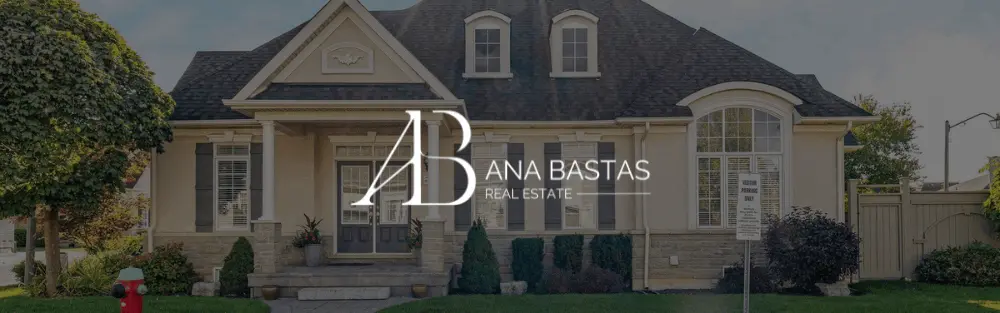
What Happens If You Buy a New Home Before Your Current Home Sells?
Buying first can solve one problem — you know exactly where you're going. But it can create another: your current home now has a deadline.
By Ana Bastas, ABR®, SRS®, SRES®, RENE®
Founder & Team Lead, Ana Bastas Real Estate Team
Real Broker Ontario Ltd., Brokerage
Serving Halton, GTA, Hamilton & Niagara Region
Real Estate Professional Since 2012
You've found it.
The house you've been waiting for.
The neighbourhood is right.
The layout works.
The backyard is exactly what you wanted.
Maybe properties like this rarely come onto the market.
There's only one problem:
You haven't sold your current home yet.
Do you let the new property go?
Or do you buy it and sell yours afterward?
This is one of the most consequential decisions a move-up buyer can make.
Buying first isn't necessarily a bad strategy.
For some homeowners, it may make perfect sense.
But I want my clients to understand something before they commit:
Once you've purchased your next home, the relationship you have with the sale of your current property can change.
Before buying, you may have had time.
After buying, you may have a deadline.
And deadlines can affect negotiating leverage.
Why Do Homeowners Buy First?
There are legitimate reasons.
The most obvious is that you've found the right property.
If your next home needs to meet very specific criteria, you may not know when another suitable property will become available.
Perhaps you need:
- A particular school area.
- A specific neighbourhood.
- A bungalow.
- A larger lot.
- A multigenerational layout.
- A certain condominium building.
- A rare floor plan.
- A home within walking distance of family.
- A property within a very specific budget.
If the right property appears, waiting until your existing home sells could mean losing it.
Buying first also removes another major uncertainty:
You know where you're moving.
That can be extremely valuable.
But before making the purchase, we need to understand what happens next.
Your Current Home Now Has a Timeline
Let's say you purchase your next home with a closing date 60 days away.
Your current property hasn't sold.
We now need to prepare it, launch it, market it, negotiate a sale and ideally coordinate its closing with your purchase.
If buyer demand is strong, that may happen relatively quickly.
But what if it doesn't?
What if we list and don't receive the activity we expected?
What if a competing property lists below us?
What if buyers like the house but believe the price is too high?
What if the strongest offer comes in below what you expected?
The new purchase doesn't disappear simply because your sale isn't going according to plan.
That's why I want to understand the downside before we make the purchase.
The Biggest Risk Isn't Necessarily Owning Two Homes
People often assume the main risk of buying first is temporarily carrying two properties.
That's certainly one consideration.
But from a real estate negotiation perspective, there's another issue:
pressure.
Suppose we list your home for $1,199,000.
You'd ideally like to sell around $1.15 million.
After several weeks, the strongest offer is $1.10 million.
Without another purchase, you might decide:
"I'm not willing to sell for that. I'll wait."
But if your new property closes in three weeks?
The conversation may be very different.
That's what sellers need to understand.
A deadline can influence your willingness to negotiate.
Never Assume Your Home Will Sell for a Specific Amount
This is one of the most important rules when buying first.
A comparative market analysis can give us a well-supported estimate.
Recent sales can help establish a likely range.
Current competition tells us what buyers are seeing.
But until a buyer signs an agreement and the transaction becomes firm, your expected selling price isn't guaranteed.
If the purchase of your next property only works financially if your existing property achieves one very specific number, buying first deserves particularly careful consideration.
I prefer to ask:
What happens if we sell for less?
If the plan still works, we have more flexibility.
If it doesn't, we need to understand that before committing.
What If Your Current Home Takes Longer to Sell?
This is another scenario we need to model.
Perhaps comparable properties are averaging several weeks on market.
What happens if yours takes longer?
Could you carry both properties temporarily?
Would your financing still work?
Would you have enough funds to close the purchase?
Would carrying costs create financial pressure?
These are questions to discuss with your mortgage professional before making the purchase.
Don't build a plan around:
"I'm sure we'll sell before then."
Build it around:
"What happens if we don't?"
Can You Carry Two Homes?
Potentially.
But this isn't something your REALTOR® should guess.
Your lender or mortgage professional needs to determine what you qualify for and what is required to complete the purchase.
There is also a second question:
Even if you can carry two properties, do you want to?
Those are different questions.
Two properties may mean two sets of:
- Mortgage payments.
- Property taxes.
- Insurance.
- Utilities.
- Maintenance.
- Condo fees, if applicable.
- Other carrying expenses.
Even a temporary overlap can affect cash flow.
Understanding that potential cost helps you evaluate the risk properly.
What About Bridge Financing?
This is where there's often confusion.
Bridge financing can potentially help when there is a timing gap between the closing of a firm sale and the closing of a purchase.
For example:
Your current home is firmly sold and closes July 30.
Your next home closes July 15.
You need access to funds before your sale closes.
Depending on your circumstances and lender, bridge financing may help address that gap.
But bridge financing shouldn't be confused with a solution for a home that hasn't sold yet.
If your plan depends on bridge financing, discuss the requirements directly with your mortgage professional before making commitments.
Can You Make the Purchase Conditional on Selling Your Home?
Potentially.
A sale-of-property condition may provide protection because your purchase is tied to selling your existing property within the terms of the condition.
However, this can affect how attractive your offer is to the seller.
Imagine the seller receives:
Offer A: Conditional on the buyer selling their current property.
Offer B: No sale-of-property condition.
Even if the prices are similar, the seller may perceive Offer B as providing greater certainty.
That doesn't mean a sale-of-property condition shouldn't be used.
It means we need to understand the trade-off.
Protection for the buyer can create uncertainty for the seller.
Don't Remove Conditions Just to Win a House
Competition can create emotional decisions.
You find the perfect home.
Another buyer is interested.
Suddenly there's pressure to make the offer as attractive as possible.
But making an offer more competitive can also mean accepting more risk.
Whether financing, inspection, sale-of-property or another condition is appropriate depends on the circumstances.
The objective isn't simply:
"How do we win?"
It's:
"How do we secure the property while keeping the risk within a level you're prepared to accept?"
Winning the house isn't a win if the financial structure doesn't work.
Buying First Can Affect How We Price Your Existing Home
This is where strategy becomes particularly important.
If you've already purchased and we know your sale needs to happen within a certain period, I may recommend a different pricing strategy than I would for a seller with unlimited time.
Why?
Because we're balancing two objectives:
Price and certainty.
If we price aggressively above the market and lose the strongest initial buyer attention, we may spend valuable time correcting the strategy later.
That doesn't mean underpricing the property.
It means recognizing that your timeline is now part of the pricing conversation.
Your Closing Date Matters
Suppose your purchase closes in 75 days.
If we sell your existing property with a 60-day closing, we may have a gap.
If your buyer agrees to 75 days, perhaps the dates align.
If your buyer needs 30 days, we need another plan.
This is why the strongest offer isn't always determined solely by price.
A buyer offering slightly less but agreeing to an ideal closing date may create meaningful value for a seller who has already purchased.
We evaluate the entire offer.
What If Your Home Doesn't Sell Before the New Home Closes?
This is the scenario that needs to be understood before you buy.
The answer depends on your financing, contractual obligations and personal circumstances.
You should speak with your mortgage professional and lawyer about the financial and legal implications specific to your situation.
From the real estate side, however, the key lesson is simple:
Don't wait until two weeks before closing to discover your Plan B.
Before purchasing, I want us to know what happens if:
The home sells immediately.
The home takes 30 days.
The home takes 60 days.
The property sells below our initial estimate.
Or the home hasn't sold by your purchase closing.
That doesn't mean we're expecting the worst.
It means we're planning responsibly.
When Buying First May Make Sense
Buying first may be worth considering when:
The property you're looking for is difficult to find
If suitable homes rarely become available, selling first could leave you waiting for an extended period.
Your finances provide flexibility
If you've confirmed that your financing and cash flow can tolerate an overlap, the risk may be more manageable.
Your existing home is highly marketable
Strong demand and limited competing inventory may reduce some uncertainty — although no sale should ever be assumed.
You're comfortable with the risk
Financial ability and emotional comfort are different.
Some clients can afford an overlap but simply don't want the stress.
That matters.
When I Would Be More Cautious About Buying First
I would want a particularly careful conversation if:
- Your purchase depends on achieving a very specific sale price.
- Your current market has significant competing inventory.
- Comparable properties are taking longer to sell.
- Recent listings have been reducing their prices.
- You have limited cash available outside your home equity.
- Carrying two properties would create significant financial pressure.
- Your purchase closing is very short.
- You would have little flexibility if the sale doesn't go according to plan.
None of these automatically means you can't buy first.
They mean we need to understand the exposure.
The Question Isn't "Can We Buy First?"
The better question is:
"If we buy first and the sale doesn't go exactly as expected, are we still okay?"
That's the question I want answered.
Because if the answer is yes, buying first may be a reasonable strategy.
If the answer is no, selling first may give you significantly more control.
Frequently Asked Questions
Can I buy another house before selling my current home?
Potentially. Whether it is financially possible depends on your circumstances and financing. Before committing to a purchase, speak with your mortgage professional about how the transaction would be structured.
What happens if I buy a house and my current house doesn't sell?
Your obligations under the purchase agreement generally don't disappear simply because your existing home hasn't sold. The specific legal and financial consequences depend on your agreement and circumstances, so obtain advice from your lawyer and mortgage professional before committing.
Can I have two mortgages at the same time?
Some homeowners may qualify to carry both properties, but qualification depends on the lender and borrower's financial circumstances. Your mortgage professional should confirm this before you make a purchase.
Can bridge financing help if my house hasn't sold?
Bridge financing commonly relates to timing differences where an existing property is already firmly sold but closes after the new purchase. Requirements vary by lender, so confirm your specific eligibility and structure with your mortgage professional.
Should I lower my asking price if I've already bought another home?
Not automatically. Review showing activity, buyer feedback, comparable sales, current competition and your remaining timeline before making a pricing decision.
Is it better to sell first or buy first?
Neither approach is universally better. Selling first generally provides more certainty about your available equity, while buying first can provide certainty about where you're moving. The appropriate strategy depends on your finances, market conditions, property search and tolerance for risk.
Buy First — But Understand the Second Move
Buying your next home before selling your current one can absolutely be part of a successful move.
But it should be a calculated decision.
Before we write the offer, I want you to understand:
What your current home realistically may sell for.
How quickly comparable properties are selling.
What happens if your sale takes longer.
What happens if it sells for less.
How the purchase will be financed.
Whether you can carry both properties.
And what Plan B looks like.
Finding the right house is exciting.
The strategy behind buying it should make sure that excitement doesn't turn into unnecessary pressure when it's time to sell yours.
Book your personalized Buy & Sell Strategy Consultation.
Ana Bastas, ABR®, SRS®, SRES®, RENE®
Founder & Team Lead | Listing Specialist
Ana Bastas Real Estate Team
Real Broker Ontario Ltd., Brokerage
Serving Halton, GTA, Hamilton & Niagara Region
Real Estate Professional Since 2012
Experience the Ana Bastas Advantage™
Continue Reading
Blog #1: Should I Sell My Home Before Buying Another One?
Blog #2: How Do You Buy and Sell a Home at the Same Time?
Blog #3: How Much House Can You Afford After Selling Your Current Home?
Categories
- All Blogs (1460)
- Ana Bastas Real Estate Team (1)
- Ana Bastas Realtor (1)
- Ana bastas Realty (1)
- Brampton (3)
- Burlington (11)
- Buy & Travel™ Program (12)
- Buy and Sell Series (5)
- Buyer (356)
- Community News (6)
- Divorce (22)
- Downsizing (21)
- Events (75)
- First Time Home Buyers (154)
- Georgetown (39)
- Georgetown Buyers (8)
- Halton Hills (274)
- Hamilton (30)
- Holidays (18)
- Holidays & Local Events (15)
- How To (141)
- Interest Rates (11)
- Investor (53)
- Join ABR Team (4)
- Landlord (106)
- Lifestyle (177)
- Milton (84)
- Mississauga (4)
- Mortgage (23)
- Niagara (47)
- Oakville (7)
- Older Home (6)
- Real Estate News (235)
- Realtor (73)
- Renter (99)
- Seller (269)
- seller education series (7)
- Tax's (28)
- Tips (43)
- Toronto (149)
- Wealth Building (16)
- Wellington (5)
- YYZ (105)
Recent Posts








"My job is to find and attract mastery-based agents to the office, protect the culture, and make sure everyone is happy! "