
Deposit vs. Down Payment in Ontario: What’s the Difference?
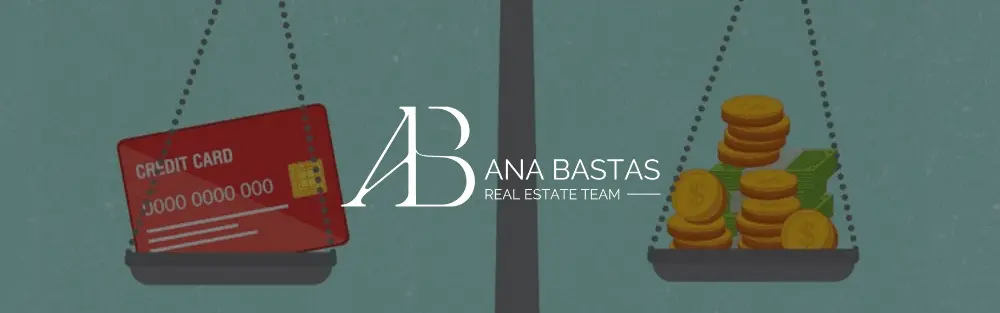
Deposit vs. Down Payment in Ontario: What’s the Difference?
“How Much Is the Deposit?” and “How Much Is My Down Payment?” Are Two Different Questions
This is one of the most common points of confusion I see with buyers—especially first-time home buyers.
You may hear your mortgage professional discussing your down payment while your Realtor is asking whether your deposit funds are readily available.
They're related, but they're not the same thing.
The simplest way to understand it is:
Your deposit is money you provide in connection with your Agreement of Purchase and Sale. Your down payment is the total amount of your own funds being contributed toward the purchase rather than financed through your mortgage.
If your purchase successfully closes, your deposit is credited toward the purchase price and forms part of the funds you're contributing to the transaction.
Let's look at how it actually works.
What Is a Deposit When Buying a Home in Ontario?
The deposit is an amount of money provided according to the terms of your Agreement of Purchase and Sale.
Among other things, it demonstrates the buyer's commitment to completing the transaction.
The agreement will specify important details surrounding the deposit, including the amount and when it must be delivered.
This is why I want my buyers to know where their deposit money is and how quickly they can access it before we submit an offer.
If your money is sitting somewhere that takes several days to transfer, that's something we need to know in advance.
When Is the Deposit Due in Ontario?
There isn't one universal deposit timeline that applies identically to every purchase.
The Agreement of Purchase and Sale determines the deposit terms for the transaction.
Depending on how an offer is structured, the deposit may accompany the offer or be payable within a specified period after acceptance.
The important point for buyers is:
Don't wait until your offer is accepted to figure out how you're going to access the deposit.
Before submitting an offer, we discuss:
How much is required → when it is required → where the funds are coming from → how you'll deliver them
That way, if your offer is accepted, you're prepared.
How Much Deposit Do You Need When Buying a House in Ontario?
There is no single standard deposit amount required for every Ontario real estate transaction.
Deposit expectations can vary based on factors such as:
- Purchase price
- Local market practices
- Property type
- Competition
- Offer strategy
- Seller expectations
- Terms of the transaction
Your Realtor should discuss the appropriate deposit with you before preparing the offer.
In a competitive situation, sellers may also consider the size of the deposit when evaluating the overall strength of an offer.
However, a larger deposit should never be offered casually.
The deposit is real money with contractual implications.
What Is a Down Payment?
Your down payment is the total amount of the purchase price that you're contributing yourself rather than financing through your mortgage.
For example, suppose you purchase a home for:
$800,000
and your mortgage will ultimately finance:
$640,000
Your total contribution toward the purchase price would be:
$160,000
That represents a 20% down payment.
Now let's introduce the deposit.
Deposit vs. Down Payment: A Simple Example
Let's continue with that hypothetical $800,000 purchase.
Purchase Price
$800,000
Total Down Payment
$160,000
Deposit Already Provided
$40,000
That does not mean you need:
$160,000 down payment
PLUS
$40,000 deposit.
Assuming the transaction proceeds to closing, the $40,000 deposit is credited toward the purchase price.
So, in simplified terms, you've already provided $40,000 of the funds being contributed toward your purchase.
The remaining funds required from you will be determined through the closing process, taking into account your mortgage, deposit, applicable adjustments and other amounts.
Is the Deposit an Extra Cost?
No.
Assuming the purchase successfully closes, your deposit is not an additional amount added on top of the purchase price.
It's credited toward the transaction.
This distinction matters because first-time buyers sometimes hear:
“You'll need a $40,000 deposit.”
and think:
“But I also need my down payment. Where am I supposed to find another $40,000?”
You generally aren't being asked to produce two completely separate pools of money.
The issue is primarily when the money is required.
Why Does the Deposit Matter So Much?
A deposit isn't simply a procedural payment.
It forms part of a legally binding real estate transaction.
Once an Agreement of Purchase and Sale has been accepted, buyers should not assume they can simply change their minds, walk away and automatically receive their deposit back.
Whether a buyer can terminate an agreement and what happens to a deposit depends on the contract and circumstances.
This is one of the reasons you should understand your offer before signing it.
If a dispute develops regarding entitlement to a deposit, legal advice may be necessary.
What Happens to the Deposit After You Pay It?
The deposit is generally handled according to the terms of the Agreement of Purchase and Sale and applicable trust requirements.
It is not simply handed to the seller to spend immediately.
Your Realtor should explain who will hold the deposit and how it is to be delivered for your particular transaction.
On a successful closing, it is ultimately accounted for as part of the purchase transaction.
What Happens to the Deposit if a Condition Isn't Satisfied?
This is where buyers need to be careful with oversimplified online explanations.
Suppose your offer contains a financing or inspection condition.
Whether the transaction can be terminated and how the deposit is dealt with depends on the actual wording of the agreement, the condition and the circumstances.
Do not assume:
“I have conditions, so my deposit is automatically refundable.”
Your Realtor should explain the real estate terms, and your lawyer should provide legal advice where necessary.
What Happens if the Buyer Doesn't Close?
Failing to complete a firm real estate purchase can have serious financial and legal consequences.
A buyer should never assume that losing the deposit is the maximum financial exposure if they fail to complete a transaction.
Depending on the circumstances, there may be consequences beyond the deposit.
If there is any possibility you cannot complete a firm purchase, speak with your real estate lawyer immediately.
This is another reason we take financing and due diligence seriously before conditions are removed and before an agreement becomes firm.
Does a Bigger Deposit Make Your Offer Stronger?
Potentially.
Imagine a seller receives two otherwise similar offers.
One includes a relatively small deposit.
The other includes a substantially larger deposit.
A seller may view the larger deposit as a stronger demonstration of the buyer's commitment and financial readiness.
In a competitive offer situation, the deposit can therefore become part of the overall negotiation strategy.
But it is only one component of an offer.
Price, conditions, closing date and other terms can all matter.
Your Deposit Needs to Be Accessible
This is one of the most practical pieces of advice I can give buyers.
Before we write an offer, know:
Where is your deposit money?
If it's sitting in your everyday chequing account, accessibility may be straightforward.
If the money needs to be transferred from an investment account, gifted by family or moved between financial institutions, you may need additional time and documentation.
Your mortgage professional may also require documentation regarding the source of your funds.
Don't start moving large amounts of money around without understanding whether your lender needs to document the source.
Deposit, Down Payment AND Closing Costs
There's one more important distinction.
Your deposit and down payment relate to the purchase price.
But you may also need additional funds for closing costs.
Those can include, depending on the transaction:
- Land transfer tax
- Legal fees and disbursements
- Title insurance
- Adjustments
- Inspection expenses
- Insurance
- Moving costs
- Other transaction-specific expenses
So when planning your purchase, think in terms of:
Deposit + Remaining Down Payment + Closing Costs + Emergency Reserve
Not simply:
“How much down payment do I have?”
A Good Buyer Is Financially Prepared Before the Right House Appears
One of the advantages of preparing early is that when the right property appears, you can focus on whether it's the right home and what it's worth.
You aren't simultaneously scrambling to figure out:
Where is my deposit?
How much do I need?
Can I transfer it tomorrow?
Is this separate from my down payment?
Those questions should already be answered.
Preparation creates negotiating confidence.
Buying a Home in Ontario?
Whether you're purchasing your first home or your fifth, you should understand every major financial obligation before signing an offer.
The Ana Bastas Real Estate Team helps buyers throughout Georgetown, Halton Hills, Milton, Oakville, Burlington, Hamilton, Niagara, the GTA and Ottawa understand the process, prepare for their purchase and make informed real estate decisions.
Understand the Numbers Before You Sign.
FAQ SECTION
Is a deposit the same as a down payment in Ontario?
No. The deposit is money provided according to the terms of the Agreement of Purchase and Sale. The down payment is the total portion of the purchase price you're funding yourself rather than through your mortgage. If the transaction closes, the deposit is credited toward the purchase.
Is the deposit included in my down payment?
The deposit is credited toward the purchase price at closing and therefore forms part of the funds you've already contributed toward the transaction.
How much deposit do I need to buy a house in Ontario?
There is no single deposit amount that applies to every Ontario purchase. Deposit expectations vary based on the property, purchase price, market and terms of the offer.
When do I pay my deposit?
The timing is specified in your Agreement of Purchase and Sale. Buyers should understand the required amount and timing before submitting an offer.
Do I automatically get my deposit back if financing falls through?
Do not assume so. The answer depends on the terms and status of your agreement and the circumstances. If there is uncertainty regarding a deposit or contractual obligation, legal advice should be obtained promptly.
Can I lose more than my deposit if I don't close?
Potentially. A buyer who fails to complete a firm purchase may face consequences beyond the deposit depending on the circumstances. A real estate lawyer should advise you immediately if you may be unable to complete a firm transaction.
Does a larger deposit make an offer better?
It can make an offer more attractive to a seller because it may demonstrate greater commitment and financial readiness, but the seller will generally evaluate the entire offer, including price, conditions, closing date and other terms.
READY TO BUY? UNDERSTAND THE PROCESS BEFORE YOU OFFER.
Buying Your First Home?
→ DOWNLOAD OUR ONTARIO HOME BUYER GUIDE
Categories
- All Blogs (1261)
- Ana Bastas Real Estate Team (1)
- Ana Bastas Realtor (1)
- Ana bastas Realty (1)
- Brampton (1)
- Burlington (1)
- Buy & Travel™ Program (12)
- Buyer (211)
- Divorce (17)
- Downsizing (3)
- Events (8)
- First Time Home Buyers (139)
- Georgetown (16)
- Georgetown Buyers (8)
- Halton Hills (264)
- Hamilton (23)
- Holidays (1)
- How To (126)
- Interest Rates (1)
- Investor (6)
- Landlord (92)
- Lifestyle (128)
- Milton (62)
- Mississauga (1)
- Niagara (34)
- Oakville (2)
- Real Estate News (161)
- Realtor (20)
- Renter (94)
- Seller (189)
- Tax's (19)
- Tips (12)
- Toronto (135)
- Wealth Building (6)
- Wellington (2)
- YYZ (107)
Recent Posts










"My job is to find and attract mastery-based agents to the office, protect the culture, and make sure everyone is happy! "