
What Renovations Add the Most Value to a Home in Ontario?
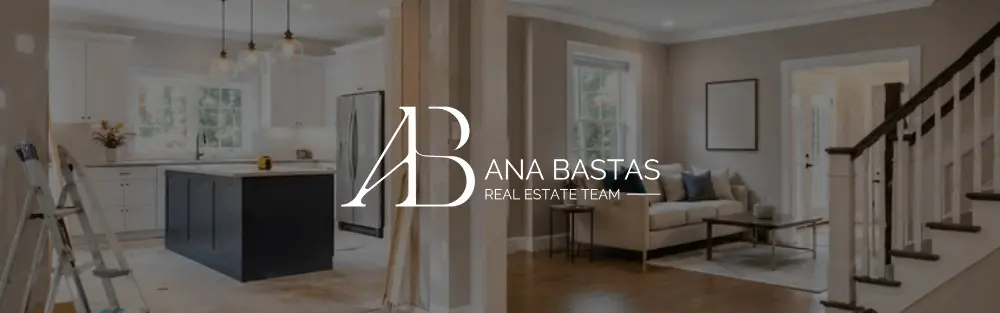
What Renovations Add the Most Value to a Home in Ontario?
If you're considering renovating your home, one of the first questions you may be asking is:
Will I actually get this money back when I sell?
The answer depends on what you renovate, the condition of your home, your neighbourhood, your price point and—most importantly—what today's buyers are willing to pay for.
After helping homeowners throughout Halton, Hamilton, the GTA, Niagara and other Ontario markets, I've seen beautifully renovated homes command a significant premium over competing properties.
I've also seen homeowners spend tens of thousands of dollars on improvements that buyers simply weren't willing to pay extra for.
That's why the question shouldn't necessarily be:
“Which renovation has the highest ROI?”
A better question is:
“Which improvements will make the biggest difference to the market value and saleability of my home?”
Here are the renovations and improvements I would generally evaluate first.
1. Kitchen Updates
The kitchen remains one of the most important rooms buyers evaluate when deciding how they feel about a home.
But that doesn't necessarily mean you need a $100,000 kitchen renovation.
Depending on the existing condition of the kitchen, strategic improvements may include:
- Cabinet refinishing or replacement
- New countertops
- Updated backsplash
- Modern hardware
- Updated lighting
- New faucets and fixtures
- Updated appliances
- Improved storage
- Fresh paint
Sometimes a well-executed cosmetic update can make more financial sense before selling than completely removing a functional kitchen and starting again.
The key is ensuring the investment is appropriate for the property's expected selling price.
A luxury kitchen may make sense in a higher-end home where buyers expect premium finishes. The same renovation could be an unnecessary over-improvement in another property.
2. Bathroom Renovations
Bathrooms can have an outsized influence on a buyer's perception of how well a home has been maintained.
An outdated bathroom can immediately make buyers start calculating renovation costs.
Updates might include:
- Vanities
- Countertops
- Mirrors
- Lighting
- Faucets
- Shower fixtures
- Tile
- Toilets
- Glass shower enclosures
- Fresh caulking and grout
Again, you don't necessarily need to gut the room.
If the layout is functional, sometimes changing the vanity, mirror, lighting and fixtures can dramatically modernize the space without the cost of a complete renovation.
3. Flooring
Flooring runs through large portions of a home, which means buyers notice it immediately.
Worn carpet, heavily damaged hardwood or multiple mismatched flooring materials can make a property feel dated even when the rest of the home is reasonably well maintained.
Depending on the home, updating flooring can create a much more cohesive appearance.
Before replacing everything, however, determine whether existing hardwood can be refinished.
Original hardwood in good condition can be a valuable feature, and refinishing may make considerably more sense than replacing it.
4. Fresh Paint
Paint is one of the simplest improvements homeowners can make before selling—and often one of the most effective.
Strong colours are not necessarily a problem when you're living in your home.
When selling, however, the objective changes.
You're trying to make it as easy as possible for buyers to imagine their furniture, their belongings and their life in the property.
A consistent, neutral colour palette can also:
- Brighten rooms
- Make spaces appear larger
- Improve photography
- Make older finishes feel more current
- Create consistency throughout the home
For many sellers, painting is one of the first improvements I would consider before spending significantly more elsewhere.
5. Curb Appeal and Exterior Improvements
A buyer begins forming an opinion of your property before they walk through the front door.
That's why exterior presentation matters.
Depending on the property and season, improvements could include:
- Landscaping
- Lawn maintenance
- Exterior lighting
- Painting or replacing the front door
- Updating house numbers
- Repairing walkways
- Cleaning exterior surfaces
- Improving the front entrance
- Repairing visible exterior deficiencies
You don't necessarily need elaborate landscaping.
Clean, maintained and intentional is often more important than expensive.
6. Lighting and Fixtures
Older lighting can date an otherwise attractive home.
Replacing certain fixtures can be a relatively inexpensive way to modernize a property.
Pay particular attention to:
- Kitchen lighting
- Dining-room fixtures
- Bathroom lighting
- Entry fixtures
- Hallway fixtures
- Exterior lighting
Also consider the actual bulbs being used.
Different colour temperatures throughout a house can make rooms photograph inconsistently and change how finishes appear.
7. Improving Functional Space
This is where renovation decisions become much more property-specific.
Adding genuinely useful living space can potentially improve a home's value.
Examples could include:
- Finishing an unfinished basement
- Creating a home office
- Improving basement functionality
- Adding storage
- Creating a more practical laundry area
- Improving an awkward layout
- Adding a legal bedroom where appropriate
- Creating an additional bathroom
But more finished space does not automatically equal an equivalent increase in market value.
Before undertaking a major project, consider permits, building-code requirements, ceiling heights, natural light, layout and how buyers in that particular neighbourhood value the additional space.
8. Energy-Efficiency and Mechanical Improvements
Not every valuable improvement is visually exciting.
Buyers also care about the systems behind the walls.
Depending on the property, improvements to items such as:
- Windows
- Insulation
- HVAC systems
- Roofing
- Electrical
- Plumbing
may remove concerns that could otherwise affect a buyer's willingness to purchase the home.
These improvements don't always produce the dramatic visual reaction of a new kitchen, but they can reduce perceived risk.
A buyer comparing two similar properties may feel considerably more comfortable purchasing the home where major systems have already been addressed.
Renovations That Don't Always Pay Back
One of the biggest mistakes homeowners make is assuming that money spent automatically becomes value added.
It doesn't.
If you spend $100,000 renovating your home, that does not automatically mean your property is worth $100,000 more.
Be especially careful with highly personalized improvements such as:
- Extremely expensive custom finishes
- Highly specific design choices
- Elaborate built-ins
- Luxury upgrades inconsistent with the neighbourhood
- Removing bedrooms to create oversized spaces
- Major layout changes without a clear market benefit
There's an important distinction between renovating for your lifestyle and renovating for resale.
If you're planning to enjoy the home for another ten years, your personal preferences should absolutely factor into the decision.
If you're selling in six months, the calculation is very different.
Should You Renovate Before Selling Your Home?
Not necessarily.
This is where homeowners can unintentionally spend money they didn't need to spend.
Sometimes the better strategy is to:
repair → prepare → stage → market → sell
rather than:
renovate → renovate → renovate → sell.
For example, imagine your home could sell for approximately $1,000,000 today.
You are considering spending $75,000 renovating the kitchen and bathrooms.
The important question isn't whether the renovated home could sell for more than $1,000,000.
It probably could.
The question is:
Will the renovation increase your eventual net proceeds enough to justify the $75,000 investment, the time involved, the inconvenience and the additional risk?
If the renovation only increases the expected selling price by $50,000, you've spent money to potentially make less.
The Neighbourhood Matters
Renovation decisions should never be made in isolation from the local market.
Buyers purchasing a detached home in Roseland in Burlington, for example, may have different expectations than buyers purchasing an entry-level condominium or townhouse elsewhere in Ontario.
The existing housing stock matters.
The competing inventory matters.
The expected buyer matters.
And the neighbourhood's price ceiling matters.
This is why generic online renovation calculators can only tell you so much.
Before You Renovate, Find Out What Your Home Is Worth
If you're considering selling within the next few years, I strongly recommend understanding your home's current market position before committing to a major renovation.
We can look at:
Current value → competing homes → recent sales → buyer expectations → potential improvements → likely resale impact
Sometimes my recommendation is to renovate.
Sometimes it's to make a few strategic cosmetic improvements.
And sometimes it's:
Don't touch it. Let's sell it exactly as it is.
The goal isn't to create the most renovated house.
The goal is to make intelligent decisions about where your money will have the greatest impact.
Thinking About Renovating Before You Sell?
Before you start spending, let's look at the numbers.
The Ana Bastas Real Estate Team can review your home's current market position and help you identify which improvements may be worth considering—and which ones you may be better off skipping.
Book a Home Selling Strategy Call with Ana Bastas →
Serving homeowners throughout Georgetown, Halton Hills, Burlington, Oakville, Milton, Hamilton, Niagara and the Greater Toronto Area.
FAQ SECTION
What renovation adds the most value to a home?
There isn't one renovation that produces the best result for every property. Kitchens, bathrooms, flooring, paint and functional improvements can all influence value, but the best investment depends on the home's current condition, neighbourhood, price range and expected buyer.
Is it worth renovating a kitchen before selling?
Sometimes. A dated kitchen can affect buyer perception, but a complete renovation isn't always necessary. Cosmetic improvements may produce a better financial outcome when the goal is resale.
Should I renovate my bathroom before selling?
If the bathroom is significantly dated or in poor condition, improvements may make the home more competitive. However, sellers should compare the cost of the renovation with the likely impact on sale price before proceeding.
Does a finished basement add value in Ontario?
A finished basement can add useful living space and make a property more attractive, but its value depends on quality, functionality, permits where applicable, the property type and local buyer expectations.
Is painting worth it before selling a house?
Fresh neutral paint can be one of the most cost-effective ways to improve presentation. It can make a home feel brighter, cleaner and more cohesive while improving listing photography.
Should I ask a Realtor before renovating?
If you're considering selling in the foreseeable future, speaking with an experienced local Realtor before undertaking major renovations can help you understand how buyers in your market may value the proposed improvements.
Ana Bastas
Founder & Team Lead
Ana Bastas Real Estate Team
Real Broker Ontario Ltd., Brokerage
ABR® | SRS® | SRES® | RENE®
Thinking About Renovating Before Selling? Let's Look at the Numbers First.
BOOK A HOME SELLING STRATEGY CALL
Categories
- All Blogs (1261)
- Ana Bastas Real Estate Team (1)
- Ana Bastas Realtor (1)
- Ana bastas Realty (1)
- Brampton (1)
- Burlington (1)
- Buy & Travel™ Program (12)
- Buyer (211)
- Divorce (17)
- Downsizing (3)
- Events (8)
- First Time Home Buyers (139)
- Georgetown (16)
- Georgetown Buyers (8)
- Halton Hills (264)
- Hamilton (23)
- Holidays (1)
- How To (126)
- Interest Rates (1)
- Investor (6)
- Landlord (92)
- Lifestyle (128)
- Milton (62)
- Mississauga (1)
- Niagara (34)
- Oakville (2)
- Real Estate News (161)
- Realtor (20)
- Renter (94)
- Seller (189)
- Tax's (19)
- Tips (12)
- Toronto (135)
- Wealth Building (6)
- Wellington (2)
- YYZ (107)
Recent Posts









"My job is to find and attract mastery-based agents to the office, protect the culture, and make sure everyone is happy! "